

.avif)


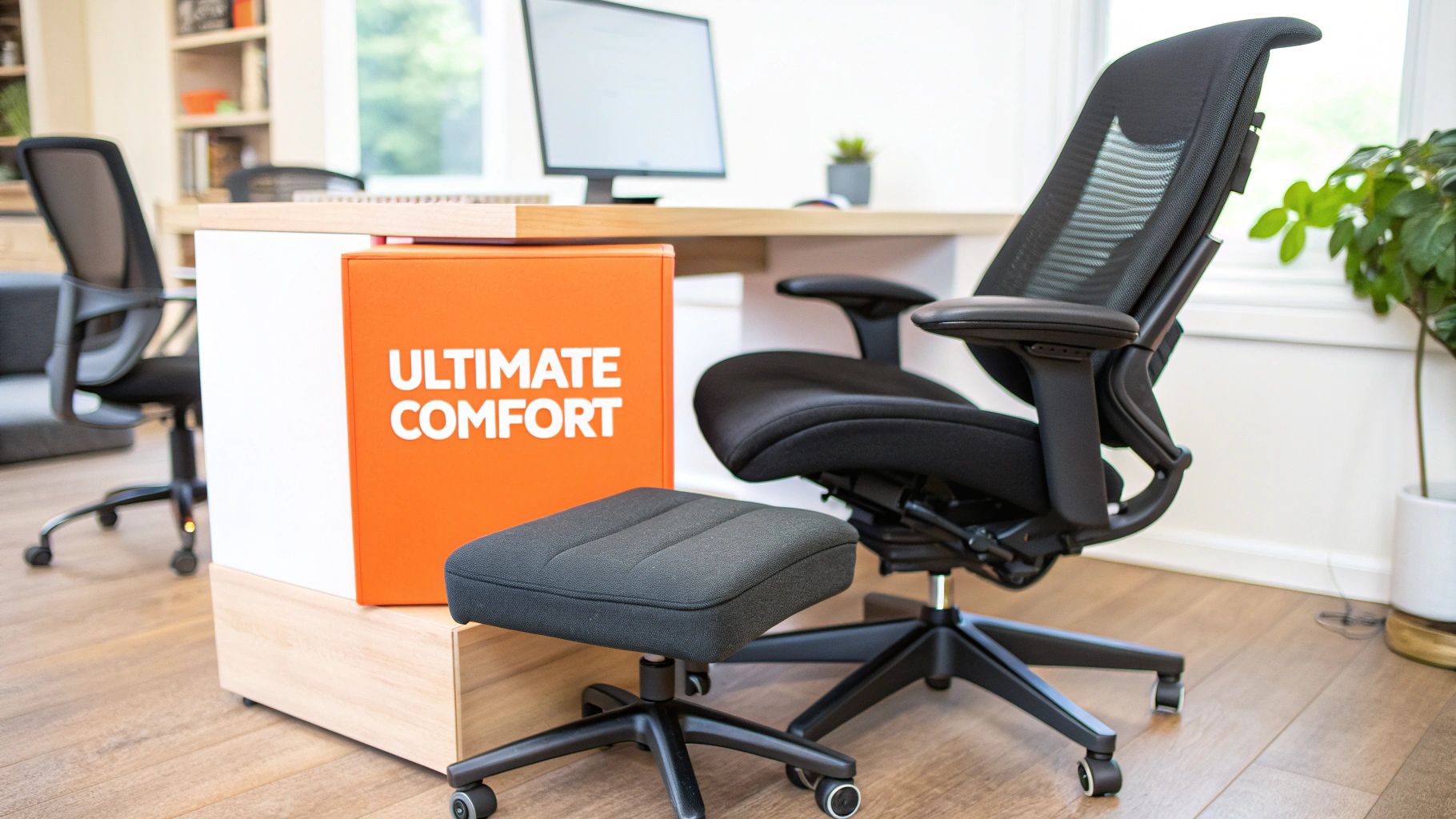
The Problem a Footrest Actually Solves
Most ergonomic advice focuses on the chair itself — lumbar support, seat height, armrests. But even a well-adjusted chair can leave your feet dangling or your knees at the wrong angle if your desk height, your chair, and your own height don't quite line up. A footrest is a simple fix for a problem that otherwise gets blamed on the chair.
The goal is a roughly 90-degree angle at the knee, with feet flat and supported. When that's not possible just by adjusting the chair, a footrest closes the gap.
Who Actually Needs One
- Shorter users: if lowering the chair enough for your feet to reach the floor also drops your arms below desk height, a footrest lets you keep the chair at the correct height for your desk and still support your feet.
- Standing desk users: when switching between sitting and standing, a footrest can help maintain circulation and reduce fatigue during longer seated stretches.
- Anyone at a fixed-height desk: not every home or office desk is height-adjustable. A footrest is the easiest way to correct the mismatch without replacing the desk.
- Long, uninterrupted work sessions: footrests that rock or tilt encourage small movements throughout the day, which helps circulation during long stretches at a desk.
What to Look For
Not all footrests are built the same, and the wrong one can do more harm than good.
- Height adjustability: a fixed-height footrest only works for one desk-and-chair combination. Adjustable models are worth the extra cost if you expect to change chairs or desks.
- A rocking or tilting platform: static footrests encourage you to leave your feet in one position for hours, which isn't much better than the problem you started with. A gentle rocking motion keeps blood flowing.
- Non-slip surface: your feet should stay put without effort. Look for a textured or grooved surface rather than a smooth one.
- Size: make sure the platform is large enough for your full foot, including a bit of room to shift position.
How It Fits Into Your Wider Setup
A footrest works best as part of a properly adjusted chair, not as a replacement for one. Set your chair height and lumbar support first, based on your desk and monitor height, and only then check whether your feet need extra support. If you're starting from scratch, it's worth reading through a broader setup guide before adding accessories on top.
Final Thoughts
A footrest is one of the cheapest ergonomic upgrades available, and one of the most overlooked. If your feet don't rest flat with your chair and desk both at the correct height, it's worth adding one rather than compromising on either. For chairs with the adjustability to get the rest of your setup right in the first place, browse the full Pago task chair range.